
Glacial Collapse and Mudslides in Nepal, the Climate Change and the Human Responsibility

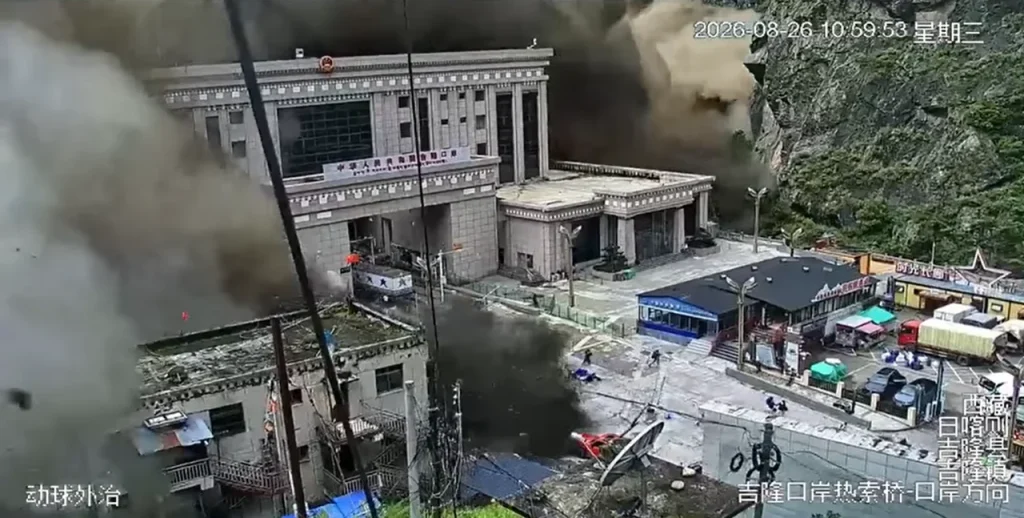
Time: Early in the morning, August 26, 2026. Place:Nepal-Tibet border region
Some people just woke up from sleep and are probably going to their workplaces and some others are just preparing for the day. The tourists are about to enjoy another lovely day in the scenic beauty of the region.
But no one anticipated such a horrific disaster was going to strike them and engulf them just within a few moments. They didn’t get time to prepare or run away. And it is time to question ourselves how we humankind are destroying our mother earth in a such a way that it can not help but create such hellish experiences for us and leave us all helpless and whether we are really open to reduce our all such behaviours that is affecting ourselves at the end in such a destructive way.
The ice in the Himalayan range is melting at nearly twice the speed as the other parts of the world. [The Japan Times] So we just saw a terrific result of it in Nepal-Tibet border. From the Langtang Lirung valley, a chunk of glacial ice of about 0.2 km square (~49 acres) broke off which was at about 5200 meters altitude. Then The ice and rock mass of the mountain range plummeted about 1.2 kimeters onto the valley floor with an estimated 200000000 cubic meter of ice, debris and rock. [Wikipedia, U.S. Geological Survey] This very event created a huge ground impact of 5.2-magnitude shockwaves which the seismometers misread as a normal earthquake. Then the flood debris travelled over 100 kilimeters downstream along the Lhende Khola, Bhote Kashi, Trishuli and Narayani river system. Water levels in the Trishuli river rose up to 9 meters within 30 minutes which then washed away and engulfed hundreds of people creating such a massive disaster. The flash flood and mudslides occurred around the Nepa-Tibet border region crossing at Gyirong Port, a strategic border crossing connecting Nepal’s Rasuwa District and Gyirong County and the flood carried the bodies of some victims 240 km (150 mi) away, with bodies recovered as far downstream as Nawalparasi district in Nepal and Kushinagar and Maharajganj districts in Uttar Pradesh, India.
Just when the article is being written, the death toll has reached 903, the number of missing people has reached 4800+, the number of missing foreign nationals is around 600 according to National Disaster Risk Reduction and Management Authority (NDRRMA). The International Federation of Red Cross and Red Crescent Societies estimated that 93,000 people were impacted by the floods.
Nepal’s Finance Minister Swarnim Wagle estimated that total reconstruction and economic losses from the disaster will reach $4-$5 billion USD—equivalent to nearly 10% of the country’s total GDP. In response, initial joint financial aid pledges have reached $229 million USD from major partners including the World Bank, India, China, and the United States, supplemented by dedicated emergency relief funding from the United Nations and individual donor nations. [Ministry of Finance Nepal (Reuters reporting), UN Office for the Coordination of Humanitarian Affairs]
As reported by CBC, HImalayans glaciers lost over 21% of their coverage in the first quarter of this century alone. High-altitude permafrost functions as a ‘cryospheric glue’ binding fractured rock walls together, but high temperatures melt these ice-filled joints creating possibilities of such substantial damages.
Who is responsible?
Along with other plausible factors, humans are deeply connected with the root causes of such disasters. Humans are increasing climate change effects. Humans are destroying the earth’s normal climate and functions because of their own selfish acts. Burning fossil fuels, industrial activities and widespread deforestation drive global warming. Building high risk infrastructure inside narrow high hazard floodplains and lack of early warning also multiplied the casualties and financial destruction in such a disaster.
The DOs and DON’Ts of humans:
Humans must rapidly transition from fossil fuels to clean renewable energy sources like wind, solar, and geothermal power. Governments and urban planners must protect primary forests, wetlands, and oceans that function as natural carbon sinks. In high-risk mountain regions, nations must install automated early warning sensors and enforce strict zoning laws that keep infrastructure out of narrow, hazard-prone floodplains. Individuals should adopt energy-efficient home appliances, utilize public transit, reduce meat consumption, and advocate for science-backed environmental policies. [UN Disaster Risk Reduction (UNDRR)]
Governments and corporations must not expand new coal, oil, or gas infrastructure that locks in decades of greenhouse gas emissions. Agricultural industries must stop clearing vital tropical rainforests. Communities should avoid constructing critical facilities, such as hydropower plants or worker camps, directly inside unmonitored mountain riverbeds. Finally, individuals must not waste food, embrace hyper-consumption like fast fashion, or indulge in climate fatalism, as preventing every fraction of a degree of warming saves lives. The individuals’ actions also matter to a great extent. Respect the climate, save the globe.